
Heavy duty steel clothes storage
Steel garment racks and freestanding closets
You run out of closet space long before you run out of clothes. We build thick steel frames, locking wheels, and deep fabric drawers that stand up to winter woolens, heavy quilts, and full laundry baskets.
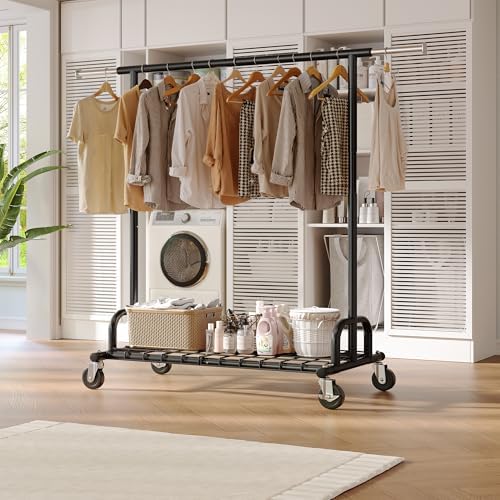
Thick steel and braced corners
We use heavy steel tubing with welded corner joints so the hanging rail holds dense rows of overcoats.
Locking casters that roll smooth
Our wheels roll over area rugs and hardwood floors, then lock down when the frame reaches its spot.
Full covers and fabric drawers
Enclosed models zip shut to shield off-season wool, while fabric bins give folded tees and socks their own home.
Built for rentals and open walls
These frames stand on their own base without drilling into drywall, so you can take them down when you move.
Four ways to hold a load
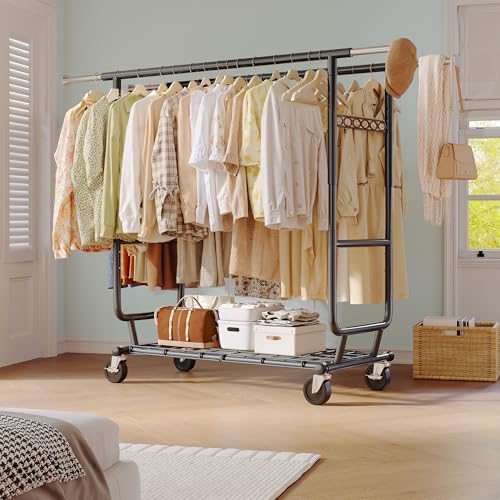
Rolling racks
Steel rails on casters. One rod, two rods, or a double-decker.
32 pieces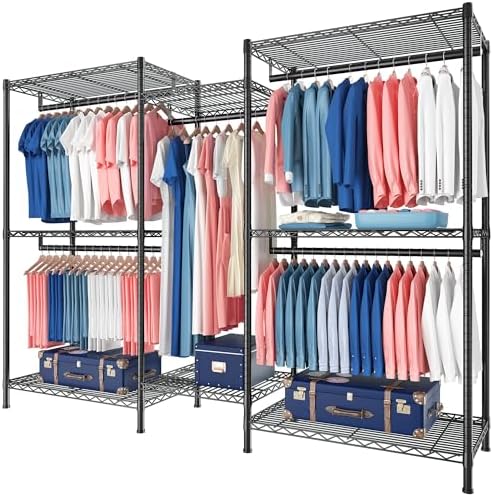
Freestanding closets
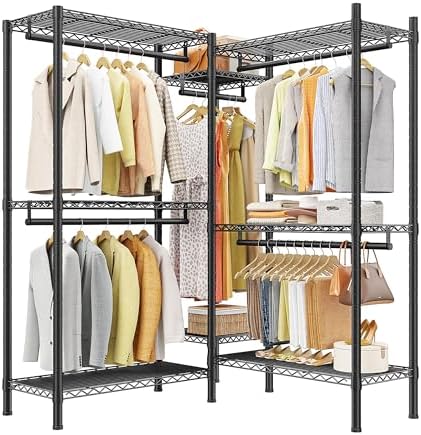
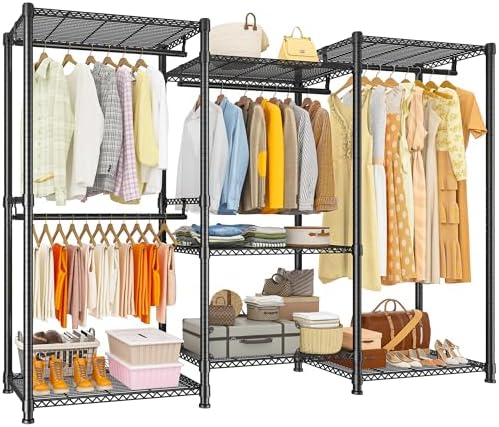
A closet that stands on its own legs: rods, shelves, sometimes drawers.
23 pieces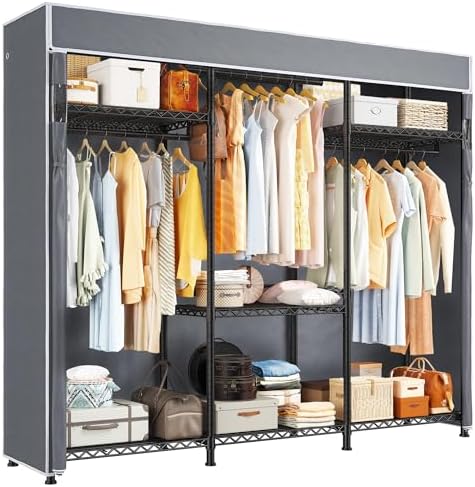
Racks with dust covers
The same steel bones, zipped inside a fabric cover.
12 pieces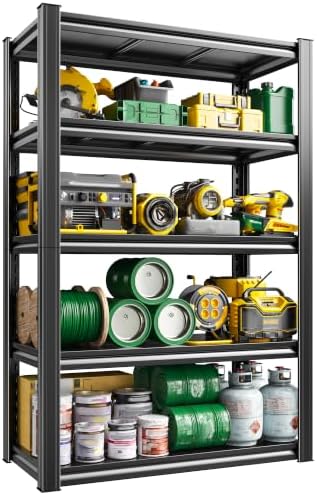
Shelves and hampers
Wire shelving rated by the thousand pounds, plus laundry sorters that roll.
7 piecesThe ones people keep buying
Full catalog by section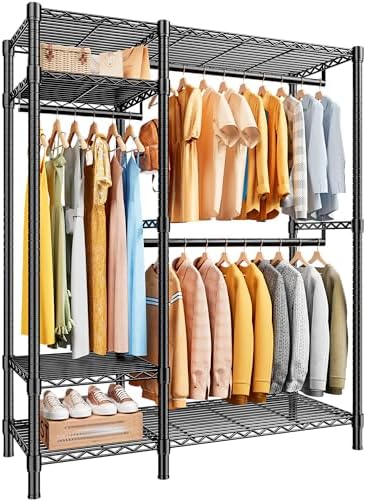
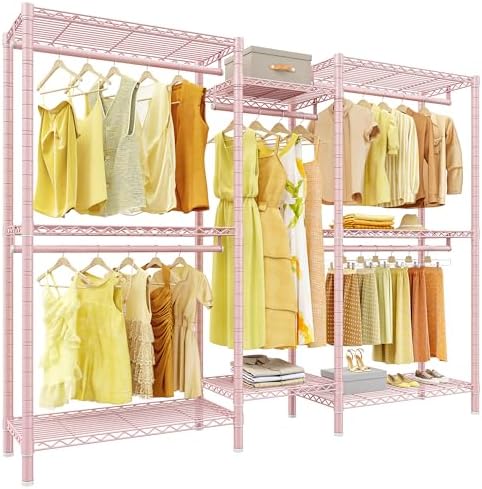
Rolling racks built for heavy coats
Thick tubular steel rails on smooth casters. Roll a whole season of clothes across the floor to steam, sort, or air out by an open window.
Rolling racks, 32 piecesFind the right frame for your clothes
Tell us what hangs in your room and we will show you rails with the right width, hanging drop, and shelf spacing to hold it all.
Open the calculator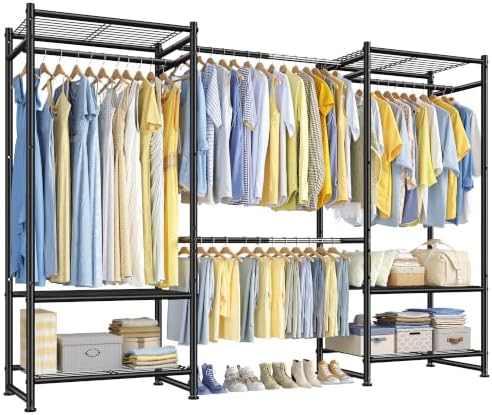
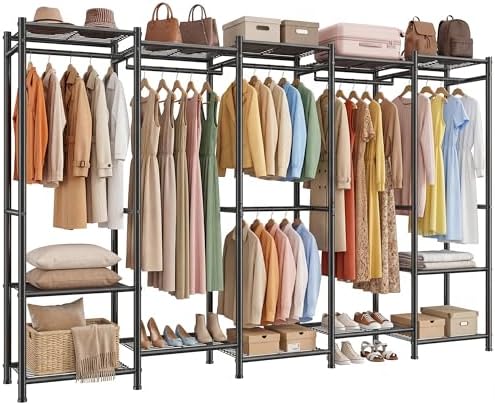
How to pick one without regrets
Measure the floor and count hangers
Check the bare wall space you have open and look at how many hangers currently crowd your doorway.
Choose open rails or enclosed storage
Pick a bare rolling rail for daily coats, an enclosed dust cover for long storage, or a full closet with drawers.
Match the frame to heavy winter coats
Thick parkas and denim add weight fast, so choose frames with reinforced corner braces and wider gauge steel posts.
| Section | Pieces | Load ratings | Widths |
|---|---|---|---|
| Rolling racks | 32 | 400–1,150 lbs | 31.49–82.7" |
| Freestanding closets | 23 | 308–1,200 lbs | 35.2–90.6" |
| Racks with dust covers | 12 | 308–1,200 lbs | 35.4–77.9" |
| Shelves and hampers | 7 | 2000–3,100 lbs | 14.6–40" |
Numbers pulled straight from the listings in the catalog, not from a brochure.
Room by room
Our freestanding closets add hanging rails, grooved wire shelves, and deep fabric drawers along any bare wall.
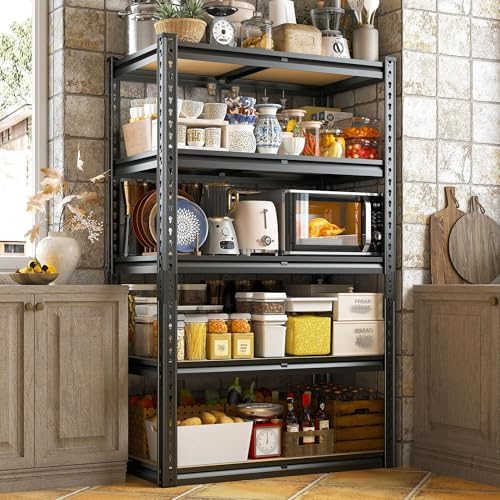
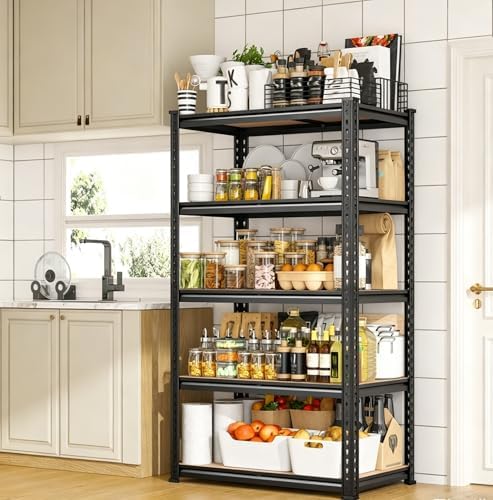
Laundry rooms and garage wallsWire shelving units hold detergent jugs and storage tubs, while steel laundry hampers keep wash piles sorted.
Off-season coats and winter beddingZippered dust cover racks wrap around your heavy jackets and extra blankets until cold weather returns.
Entryways and daily clothing railsA rolling garment rack keeps your work jackets, shoes, and weekly rotation right by the door.
The one with the longest paper trail
Clothes rack — 650 lbs, 2 rods — black
Shallow closets leave heavy coats and work trousers squeezed together on thin wire hangers. We built this black steel rack with adjustable height and pull-out rod ends so long dresses hang clear of the base. When moving day arrives, the uprights collapse down flat without tools.
Checked when this page was written; the store page carries the number that counts.
Keeping steel boring
Worth doing
- Wipe down the steel tubes with a damp cotton cloth and mild soap.
- Place heavy winter coats near the center of the rail for balance.
- Lock the wheel brakes once the frame sits in its corner.
- Unzip cover panels fully before reaching for shirts inside.
Not worth doing
- Do not hang your heaviest parkas all on one end of an extended bar.
- Do not push loaded racks over deep shag carpet with the wheels locked.
- Do not force stubborn zippers past fabric caught in the teeth.
- Do not drag frames sideways when casters are turned the other way.
Why we build clothes storage in heavy steel
Most bedrooms lack the closet space a busy household needs. Flimsy rods bow under the weight of winter parkas, and plastic joints crack when you try to roll them. We make our frames from thick steel tubing and rigid wire tiers. It gives your daily clothes a dedicated place to hang without tearing into drywall or buying disposable furniture.
Choosing clothes racks, freestanding closets, and wire shelving
Our catalog divides into rolling racks on casters, freestanding closets with shelves and drawers, racks wrapped in zipped covers, and open wire shelving with laundry hampers. Each section handles a different storage load in your home. Rolling frames make sorting laundry manageable, while wide closet systems stand in for a full built-in against an empty bedroom wall.
| Section | Reach for it when |
|---|---|
| Rolling racks | Steel rails on casters. One rod, two rods, or a double-decker. |
| Freestanding closets | A closet that stands on its own legs: rods, shelves, sometimes drawers. |
| Racks with dust covers | The same steel bones, zipped inside a fabric cover. |
| Shelves and hampers | Wire shelving rated by the thousand pounds, plus laundry sorters that roll. |
The frames vary by steel gauge, rail length, shelf layout, and wheel size. Some rails telescope outward when you need extra hanging space for long dresses, while other units arrange in an L shape to fit tight room corners. Wire shelves lock onto grooved corner posts, allowing you to raise or lower tiers to clear tall boots or stack storage boxes.
| What varies | Across the catalog |
|---|---|
| Static load rating | 308 to 3,100 lbs |
| Rail width | 14.6 to 90.6 inches |
| Pieces with a fabric cover | 12 of 74 |
| Pieces that roll on casters | 26 of 74 |
Where to start
Start with the pile of clothes that has no home. If everyday shirts and work coats are draped over chairs, pick a rolling rail with lower shoe shelves. If you are outfitting a rental bedroom that has no closet at all, look at our wide freestanding frames with hanging rods and bottom drawer bins.
Field notes
The whole notebookHang or fold: deciding what earns rail space
Rail inches are the scarce thing in a closetless room. A field method for sorting a pile into what hangs, what folds and what that means in steel.
Rooms without closetsSetting up a bedroom that came with no closet
Older houses and converted rooms skip the closet entirely. How we would stand a freestanding one: the wall, the measurements, the dust question and the renter question.
The fine printHow to read a load rating without getting burned
A static rating assumes an evenly spread, motionless load. What the number on our listings means, what it quietly assumes and where people overshoot it.
Under coverA year under the zipper: living with a dust cover
What a fabric cover is good at, what it was never for, and the small zip habits that decide whether it lasts. Notes from a year of covered racks.
Moving dayMoving day with a garment rack
A loaded rack can cross a room in a minute, or crab into a doorframe. Rolling, folding, taking a frame apart and getting it back together on the far side.
Heard back from the floor
The rail holds my entire winter rotation without sagging in the middle. The wheels roll over the rug smoothly when I clean the floor.
We put the wire shelf and hamper unit in the garage alcove. It takes muddy work boots on the bottom and detergent bottles up top.
The dust cover zips all the way around my heavy wool coats for summer. The fabric front rolls up and stays out of the way when I need it.
Find the right steel storage for your space
Look through our rolling racks, covered frames, and wire shelving units to find the one that fits your wall.